Cords and Face Cords: Firewood Size Guide
When homeowners ask how many cubic feet in a cord of firewood, they’re often surprised that the answer is not as simple as it seems. A cord is a precise legal measurement, used across North America to define the amount of stacked wood. Understanding the difference between a full cord, a face cord, or fractional cords helps avoid confusion and ensures fair purchases.
Cord of Wood Dimensions
A cord of wood is a neatly stacked pile measuring 4 feet high, 4 feet deep, and 8 feet long. In total, a cord equals 128 cubic feet of tightly stacked firewood. However, because logs are irregular and gaps exist between pieces, the actual solid wood content is closer to 80–90 cubic feet. The rest is air space between logs.
| Cord Type | Dimensions (Feet) | Approx. Volume (Cubic Feet) | Typical Use |
| Full Cord | 4 × 4 × 8 | 128 | Standard heating unit |
| ½ Cord | 4 × 4 × 4 | 64 | Small stoves or partial refill |
| ¼ Cord | 4 × 4 × 2 | 32 | Occasional or decorative use |
| Face Cord | 4 × 8 × 16-inch logs | ~42 | Quick burning or supplemental fuel |
This system ensures consistency when buying or selling wood by volume. A cord is a trusted benchmark in both retail and wholesale trade.
Full Cord of Wood
A full cord of firewood includes three stacks of logs, each around 16 inches deep. Firewood is measured by volume, not by weight, because moisture content and wood density vary greatly. A full cord offers the best value per cubic foot, especially when wood has been properly seasoned and dried.
Buyers should confirm that the delivery matches standard dimensions. Some sellers advertise a “truckload” or “pile,” which can contain less than a full cord. Knowing how much wood to expect prevents overpaying.
1/2 Cord of Wood
A half cord represents 1/2 of the total volume of a full cord — roughly 64 cubic feet. It’s ideal for occasional use in fireplaces or for those with limited storage. Many homeowners in suburban areas prefer this amount because it balances price and convenience.
When buying half cords, it’s essential to check stacking quality. If logs are loosely piled, the cubic footage may drop below expected measurements.
Face Cord of Wood
A face cord measures the same height and length as a full cord but contains only one stack of logs with shorter depth — typically 16 inches. This equals about 1/3 of a full cord. The total volume averages 42 cubic feet, depending on how tightly the wood is stacked.
Face cords are popular because they are easy to handle and store. However, since they include less wood, the price per cubic foot is usually higher than a full cord. When asking how many cubic feet in a cord of firewood, it’s helpful to remember that a face cord is only a portion of the full unit.
1/4 Cord of Wood
A quarter cord equals about 32 cubic feet. It’s a practical option for camping, fire pits, or short-term heating. This size fits easily into smaller storage spaces, garages, or sheds. Firewood suppliers often sell quarter cords in bundled packages for residential customers.
1/2 Face Cord of Wood
A half face cord provides roughly 21 cubic feet of stacked logs — half the size of a standard face cord. It’s suitable for decorative fireplaces or restaurants that use wood-burning ovens but don’t require large storage capacity.
How Should You Store Your Firewood?
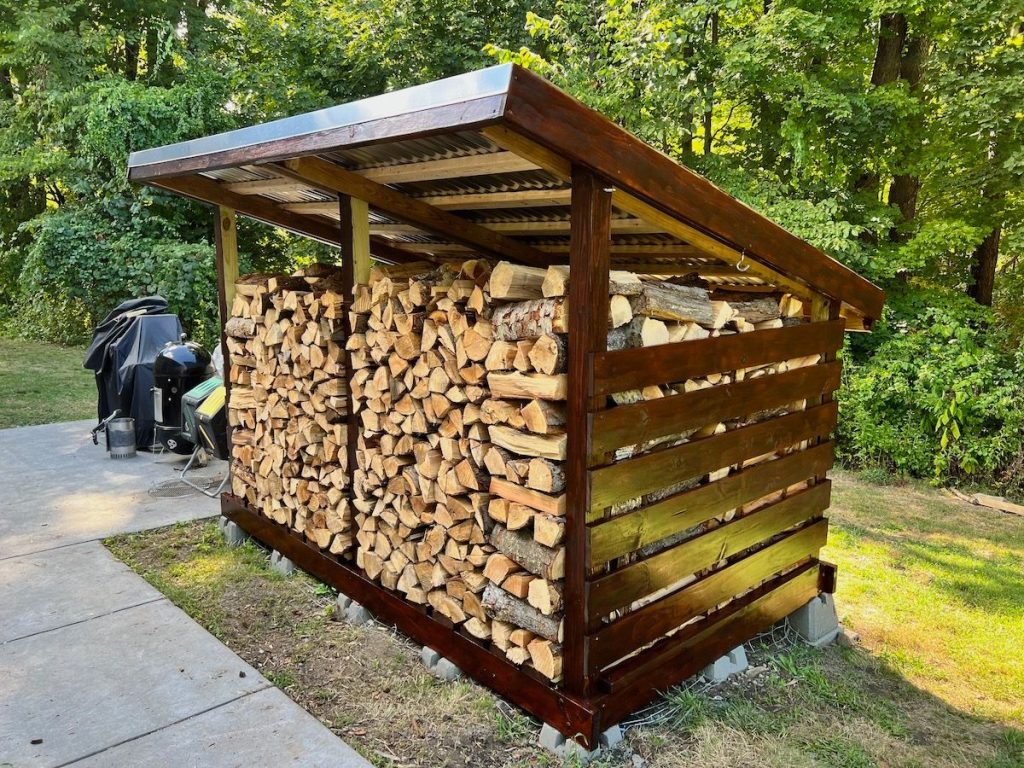
Proper storage extends the life of your wood supply and preserves heating efficiency. Firewood should be kept off the ground, covered on top, and left open on the sides for airflow.
Tips for storing firewood:
- Stack on pallets or concrete blocks with a 4-inch air gap below;
- Keep piles 4 feet high for stability;
- Cover only the top to prevent trapped moisture;
- Store in a sunny, breezy location for faster drying.
Well-seasoned wood typically contains less than 20% moisture, producing cleaner burns and less creosote buildup.
Shop Online or Search by Brand for a Dealer Near You!
Today, customers can shop online and find verified dealers who sell wood by the cord or by fractional volumes. Major brands and regional firewood companies list dimensions clearly to help customers calculate how many cubic feet they are purchasing. Always verify whether prices refer to a full cord or face cord to avoid misunderstandings.
Local firewood suppliers often provide volume calculators or PDFs to simplify comparisons. Ordering from a certified company ensures accurate weights, sizes, and moisture guarantees.
Related Podcasts
How to Season Firewood
Seasoning means drying logs to reduce water content. Freshly cut wood may contain 50% moisture; seasoned wood burns efficiently and produces more heat. Split logs to expose inner surfaces, stack them with gaps, and allow 6–12 months of drying time.
How Much Firewood Do You Need?
The amount depends on home size, stove efficiency, and climate. A small cabin might use 2–3 cords per season, while a large home could require 6 or more. Tracking usage helps plan deliveries with a consistent schedule and maintain supply throughout winter.
Wood Pellets vs. Logs: Which Fuel Should You Burn?
Wood pellets offer convenience and automated feeding, while traditional logs provide ambiance and flexibility. Each option has advantages, but firewood remains the classic, renewable source for heating and recreation.
Join the DIY homeowners and industry pros who receive our weekly insights, tips, and best practices.
Stay informed about firewood dimensions, efficient burning, and storage methods. Understanding how many cubic feet in a cord of firewood helps every buyer make smarter, safer, and more cost-effective choices.